

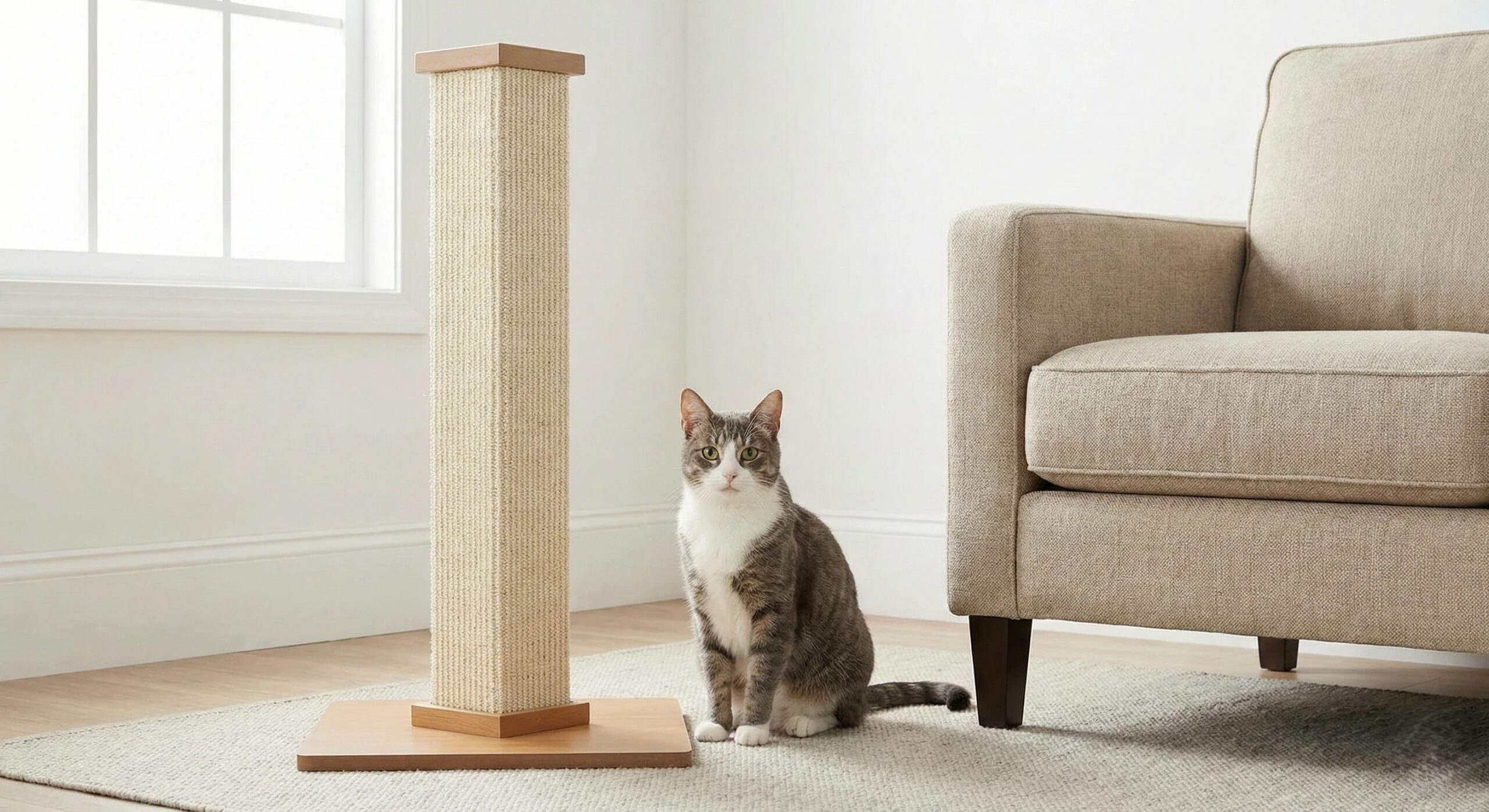
If you’re searching for how to stop a cat from scratching furniture, you’re not alone – and your cat isn’t being “bad.” Scratching is normal feline behavior. Cats scratch to stretch, maintain their claws, and mark territory. The goal isn’t to eliminate scratching. The goal is to redirect it to the right places so your couch, chairs, and door frames survive.
This guide walks you through a clear 7-day fix plan, how to choose the right scratchers, what to do if your cat ignores them, and how to protect tricky surfaces like leather furniture – without punishment, drama, or risky “home remedies.”
Why Cats Scratch Furniture (And Why It’s Normal)
Scratching = stretching, claw maintenance, and marking
Scratching serves three big needs:
- Stretching and muscle release (it feels good)
- Claw upkeep (shedding the outer nail layers)
- Territory marking (visual marks + scent from paw glands)
So when your cat scratches the couch, they’re not trying to annoy you—scratching is normal cat behavior (ASPCA).
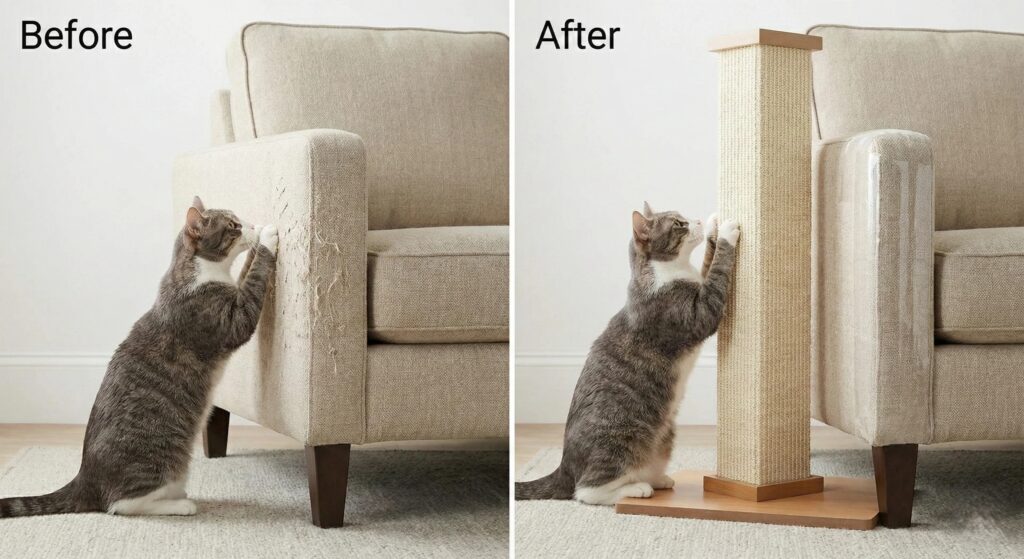
Why furniture is often the “perfect scratcher”
Furniture usually checks every box a cat wants:
- Stable and tall (great for a full-body stretch)
- In a social area (where you spend time)
- Textured (fabric and some leather feel satisfying)
If the scratching post is short, wobbly, or hidden in a corner, the couch wins every time.
Why punishment backfires (and what to do instead)
Punishing (yelling, clapping, spraying water) can:
- increase stress
- damage trust
- teach your cat to scratch when you’re not around
Instead, use redirect + reward. You’re not “correcting” your cat—you’re building a better habit.
Quick Answer (Do These 3 Things First)
1) Put the scratcher where your cat already scratches
Place a scratching post within 1–2 feet of the exact spot your cat targets (couch arm, chair corner). Location matters more than most people think.
2) Make the furniture temporarily unattractive
Use a temporary barrier on the scratched area:
- double-sided tape (test a small area first)
- a tucked-in cover/blanket
- a furniture protector
This makes the furniture less satisfying while your cat learns the new option.
3) Reward the right behavior immediately
When your cat scratches the scratcher, reward within 1–2 seconds:
- a small treat
- calm praise
- a quick play session
Timing is everything. Reward the scratcher use, not the “walking away from the couch.”
How to Stop a Cat From Scratching Furniture: The 7-Day Fix Plan
Day 1 — Placement: move the scratcher to the problem area
Today, you stop thinking of scratchers as “accessories” and start treating them like tools.
Do this:
- Put the scratcher right next to the furniture being scratched.
- If your cat scratches the couch arm, place the scratcher beside that arm.

Goal: Make the scratcher the easiest option.
Day 2 — Offer options: vertical + horizontal scratchers
Cats often have a preference. Many owners fail because they offer only one type.
Add two scratch styles:
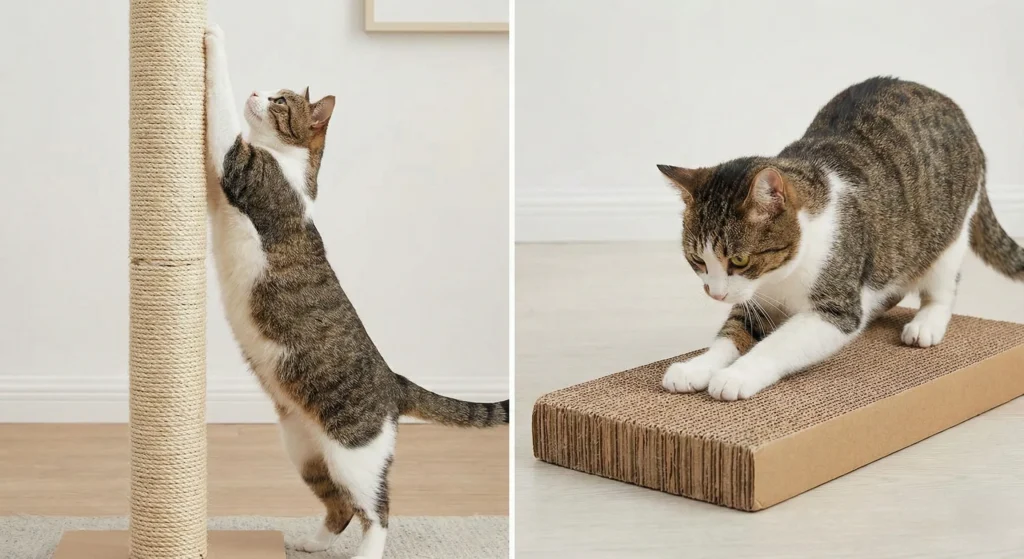
- Vertical scratcher (post/tower)
- Horizontal scratcher (cardboard pad or scratch mat)
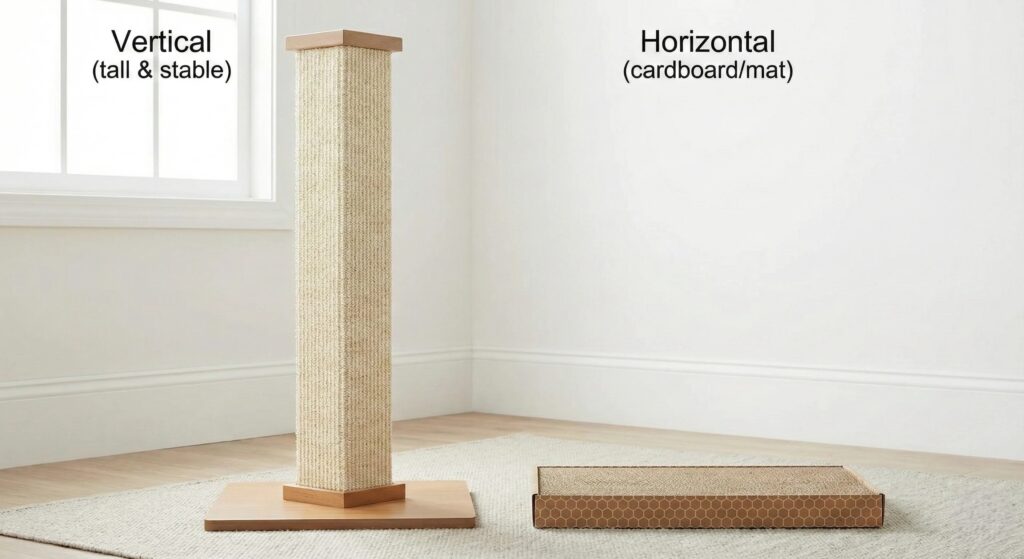
Place them where your cat spends time (living room, near a favorite nap spot).
Day 3 — Protect furniture: tape/cover/protectors
This is your “training wheels” day.
Pick one:
- double-sided tape on the scratched area
- a fitted or tucked-in blanket/cover
- a furniture protector panel

Why it works: Your cat will naturally choose the surface that feels most rewarding. We’re making the scratcher the reward.
Day 4 — Reinforce: reward timing that actually trains
Now you teach the habit.
Best method:
- When your cat scratches the scratcher: reward instantly.
- If your cat starts scratching furniture: calmly redirect to scratcher.
Tip: Keep treats near the scratcher for the first week so rewards happen fast.
Day 5 — Add routine: play → calm → snack
Some cats scratch more when bored, under-stimulated, or bursting with energy.
Daily routine (10 minutes):
- 5–7 minutes of interactive play (wand toy works great)
- 1–2 minute cool-down
- small meal/snack
This “hunt → eat → rest” rhythm helps reduce unwanted behaviors over time.
Day 6 — Optimize: height, stability, and texture
If your cat still prefers the couch, your scratcher may be the wrong “feel.”
Check:
- Height: tall enough for a full-body stretch
- Stability: doesn’t wobble or tip
- Texture: many cats like sisal or cardboard
If the scratcher is unstable, upgrade it. One wobble can make a cat avoid it permanently.
Day 7 — Maintain: fade out protection gradually
If your cat is scratching the right thing more often, don’t remove everything at once.
Do this:
- keep scratchers in place
- reward occasionally (not every time)
- remove tape/cover gradually over several days
If scratching returns, re-cover the spot and wait a few days before trying again.
Choose the Right Scratcher (Most People Get This Wrong)
Height: full-body stretch matters
A good vertical scratcher should allow your cat to stretch fully. Many “cute” posts are too short.
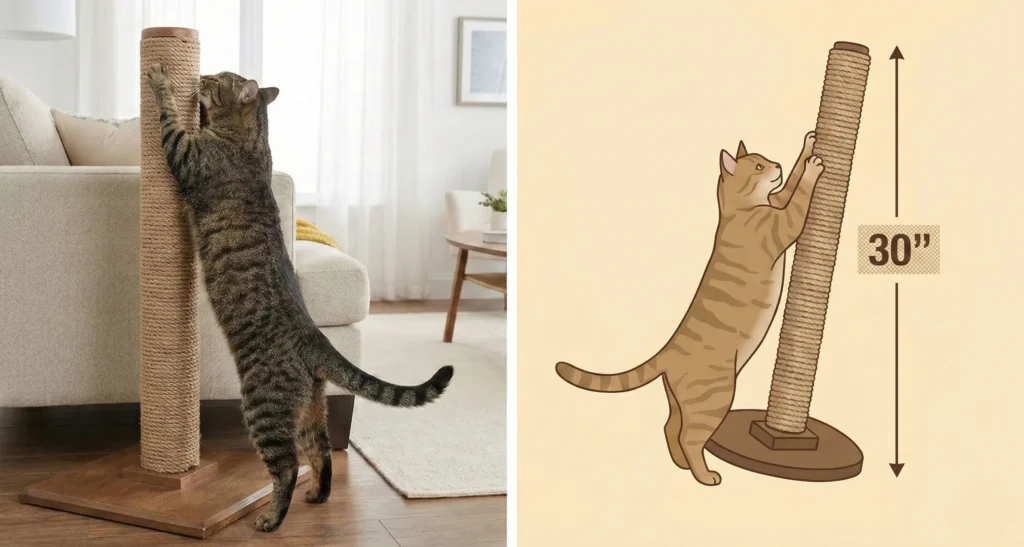
Stability: no wobble = consistent use
Stability is non-negotiable. If the post moves while scratching, many cats won’t trust it again.
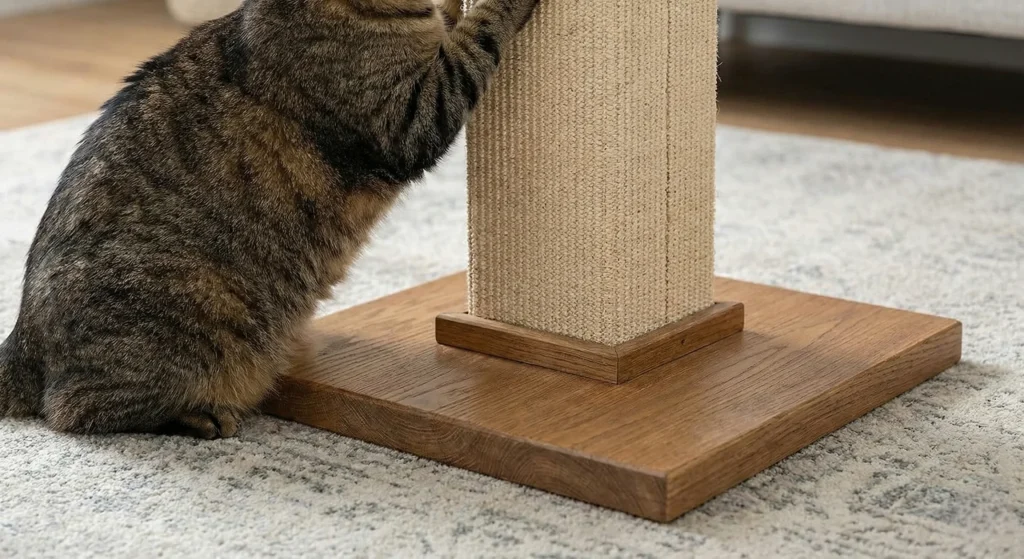
Materials cats prefer (and how to test preference)
Most cats prefer:
- Sisal (rope texture)
- Cardboard (especially horizontal scratchers)
To test preference, place one vertical and one horizontal option and see which your cat uses more in 48–72 hours.
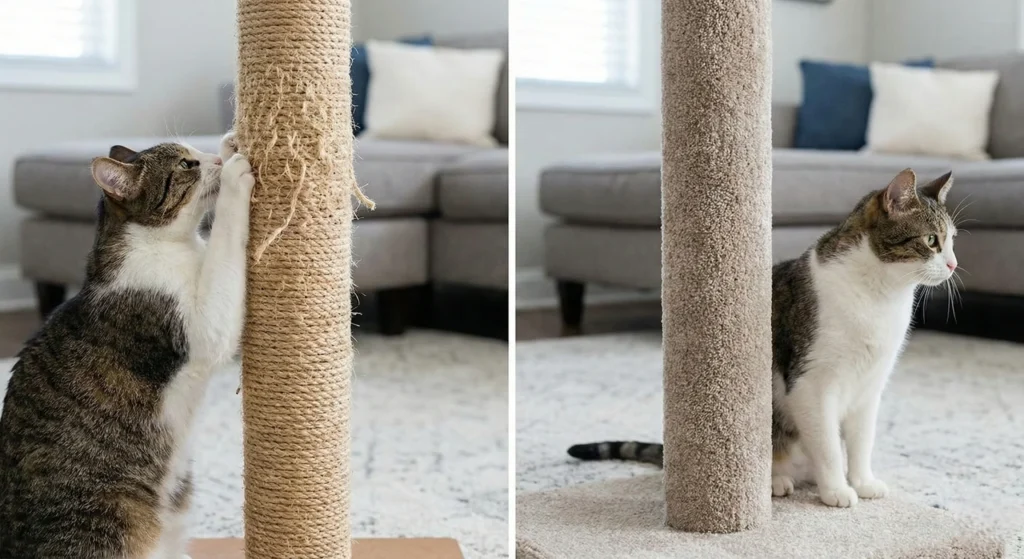
Location: “social” areas vs hidden corners
Cats are more likely to scratch:
- near where you relax
- near entryways
- near windows
- near their nap areas
A scratcher hidden in a laundry room rarely wins against a couch in the living room.
Troubleshooting (If Your Cat Still Scratches the Couch)
“My cat ignores the scratching post”
Most common reasons:
- the post is too far away
- it’s wobbly or too short
- wrong scratch style (vertical vs horizontal)
Fix: Move it next to the couch + offer both vertical and horizontal scratchers.
“My cat uses the post but still scratches furniture”
This usually means the furniture still “feels better” or the habit isn’t fully formed yet.
Fix:
- keep tape/cover on furniture longer
- increase rewards when your cat uses the scratcher
- add a second scratcher near another favorite spot
“My cat scratches at night or when I’m away”
This can happen when your cat has excess energy.
Fix:
- play session before bedtime
- keep a scratcher near sleeping areas
- add enrichment (window perch, rotating toys)
“My cat scratches carpet and rugs”
Your cat may prefer a horizontal surface.
Fix:
- add a large horizontal scratch pad/mat near the rug area
- reward use immediately
How to Stop a Cat From Scratching Leather Furniture
Leather shows scratches quickly, so prevention is key.
Protect leather safely (covers, tape, protectors)
Use:
- a couch cover or tightly tucked blanket
- a protector panel
- double-sided tape (test a tiny spot first to reduce risk of residue issues)
Best scratcher placement near leather furniture
Place a tall, stable vertical scratcher:
- right beside the leather couch arm your cat targets
- near the spot where your cat jumps up often
Common leather-specific mistakes to avoid
- leaving the scratcher across the room
- removing protection too soon
- relying on one small post for the whole house
Mistakes That Make Scratching Worse
Punishing or scaring your cat
This often creates stress and makes scratching sneakier.
Buying a scratcher that’s too small or unstable
A short, wobbly scratcher can fail even if your cat “wants” to use it.
Moving scratchers too early
Wait until scratching the post is a consistent habit before relocating anything.
Not providing enough enrichment
Cats with unused energy often create their own “activities.” Scratching becomes one of them.
When to Get Help (Safe, Non-Medical Guidance)
If scratching becomes sudden and intense, or you notice major changes in routine, consider consulting a vet or a qualified cat behaviorist for personalized guidance.
If you need deeper behavior guidance, International Cat Care (iCatCare) has a helpful overview of scratching and enrichment.
What info to track before asking for help (simple log)
For 3–5 days, note:
- when scratching happens (time of day)
- where it happens (exact spot)
- what happened right before (you left, visitors, playtime, etc.)
- which scratchers your cat does use (if any)
This makes professional advice much more useful.
Wrapping Up: Your Plan in One Minute (Summary Checklist)

The 3-step rule
- Place scratchers where scratching happens
- Protect furniture temporarily
- Reward scratcher use immediately
The 7-day plan recap
- Day 1: placement
- Day 2: vertical + horizontal options
- Day 3: protect furniture
- Day 4: reward correctly
- Day 5: play routine
- Day 6: optimize scratcher setup
- Day 7: fade protection slowly
If it comes back
Bring back the cover/tape for a few more days and keep rewarding the scratcher. Habits sometimes need reinforcement.
FAQs
How long does it take to stop furniture scratching?
Most cats improve within 7–14 days with correct placement, protection, and rewards.
Should I punish my cat for scratching the couch?
No. Punishment can increase stress and often makes scratching happen when you’re not watching.
What if my cat ignores the scratching post?
Move it next to the furniture and offer both vertical and horizontal scratchers. Preference and placement are usually the issue.
If you stay consistent for a week, how to stop a cat from scratching furniture becomes much easier—because your cat learns the scratcher is the best option.